
Designing a Windowless Basement That Doesn’t Feel Like One
Rethinking “Dark” Spaces: Why Windowless Doesn’t Mean Dreary
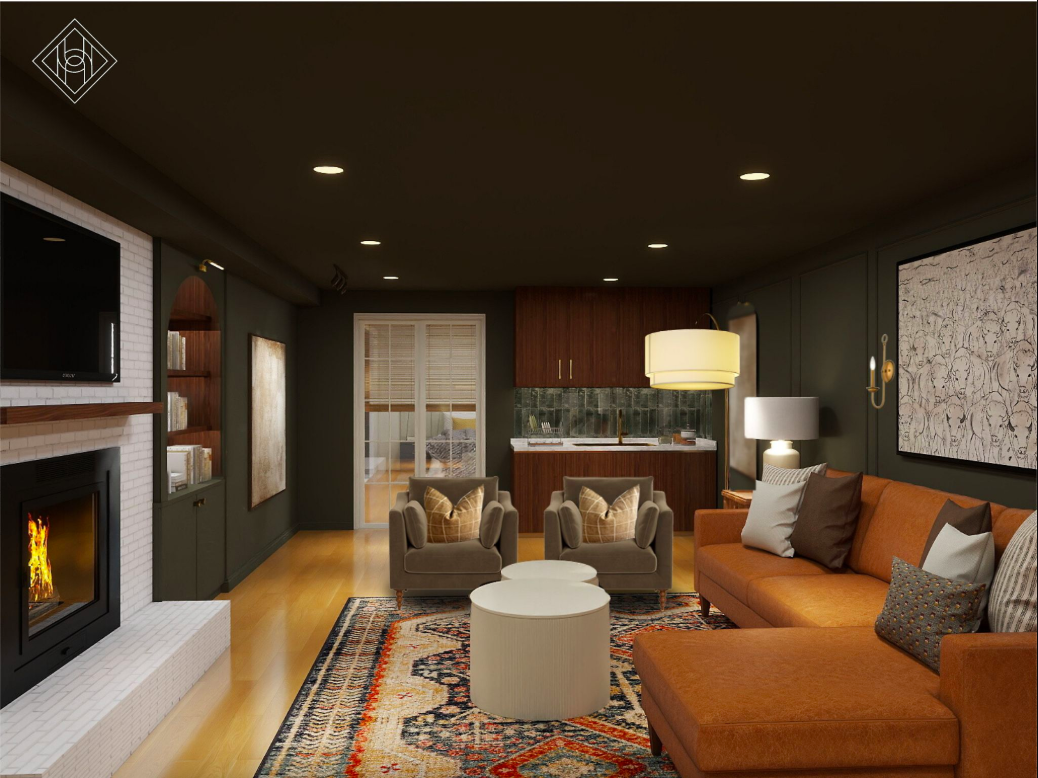
Basements get a bad rap for being dark and cave-like, but the key is to lean into the moody vibe with intention. This Homzie-designed living room embraces rich tones—like the olive built-ins, burnt caramel leather sectional, and dark ceiling paint—but counterbalances them with warmth and elegance. Rather than fight the lack of natural light, this space owns it. The result? A cocoon-like lounge that feels elevated, not enclosed.
Layer Your Lighting Like a Pro
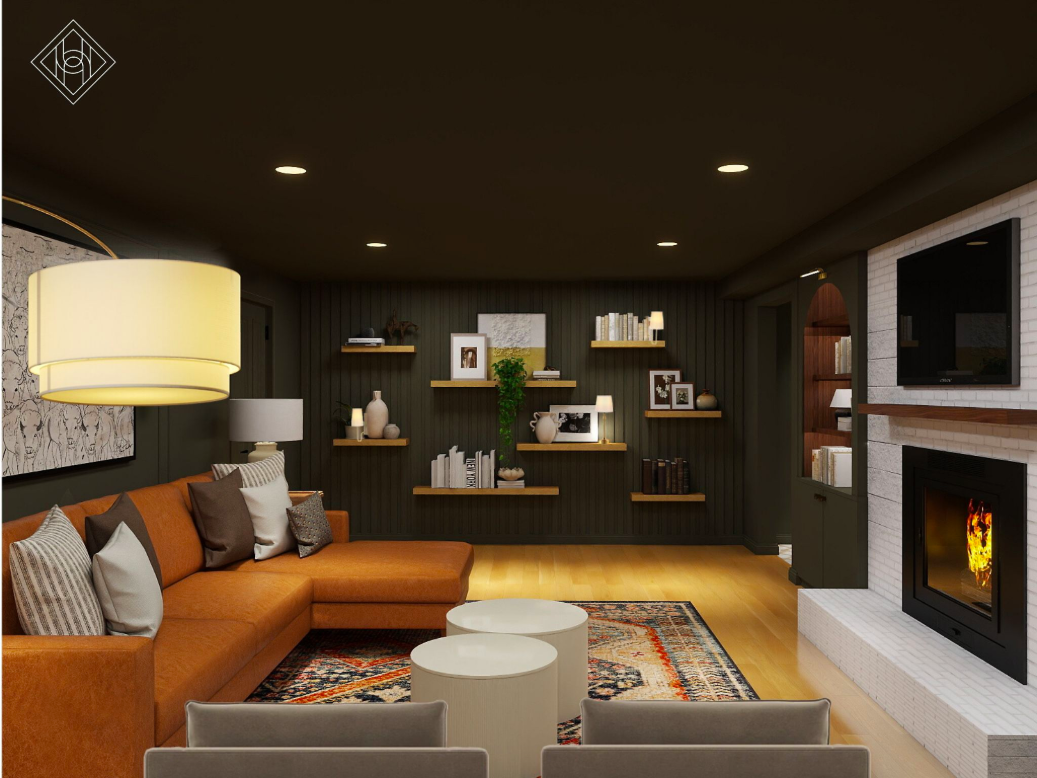
When there are no windows, lighting is your most powerful design tool. This space incorporates multiple lighting sources: brass library sconces, table lamps, a sculptural floor lamp, and an oversized drum pendant. Each light adds a layer of glow—uplighting shelves, spotlighting art, and softly illuminating seating areas. The key is mixing ambient, task, and accent lighting to create depth and dimension.
Designer tip: Use warm temperature bulbs (2700K–3000K) to avoid the clinical feel overhead LEDs can create in windowless spaces.
Bold Color, But Make It Balanced
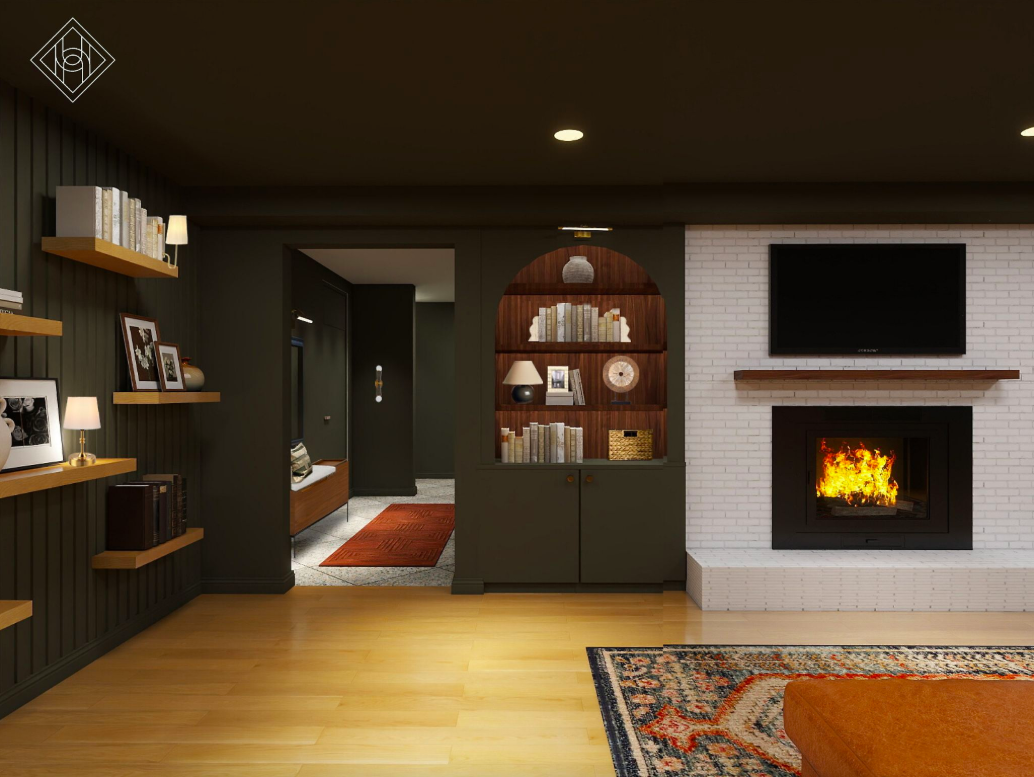
A dark olive paint wraps the walls and ceiling, creating a cozy, dramatic envelope that makes the space feel purposeful—not accidental. Paired with warm wood tones, soft brass accents, and layered textiles (like the richly patterned rug), the palette feels both grounded and luxe.
To prevent a “heavy” vibe, Homzie’s design smartly adds contrast through cream stackable coffee tables, a statement mirror to reflect light, and creamy velvet chairs that pop against the deeper hues.
Function-First Furniture with High Style
In many basements, layout and square footage can be tricky. This design features a tailored leather sectional with a pull-out sleeper—perfect for guests—and stackable coffee tables that can easily shift when needed. Built-in shelving flanking the fireplace adds both storage and symmetry, while floating shelves provide display space without feeling bulky. Everything is highly functional without sacrificing an ounce of style.