
Masculine Moody Interior Design: How to Create a Rich, Timeless Home
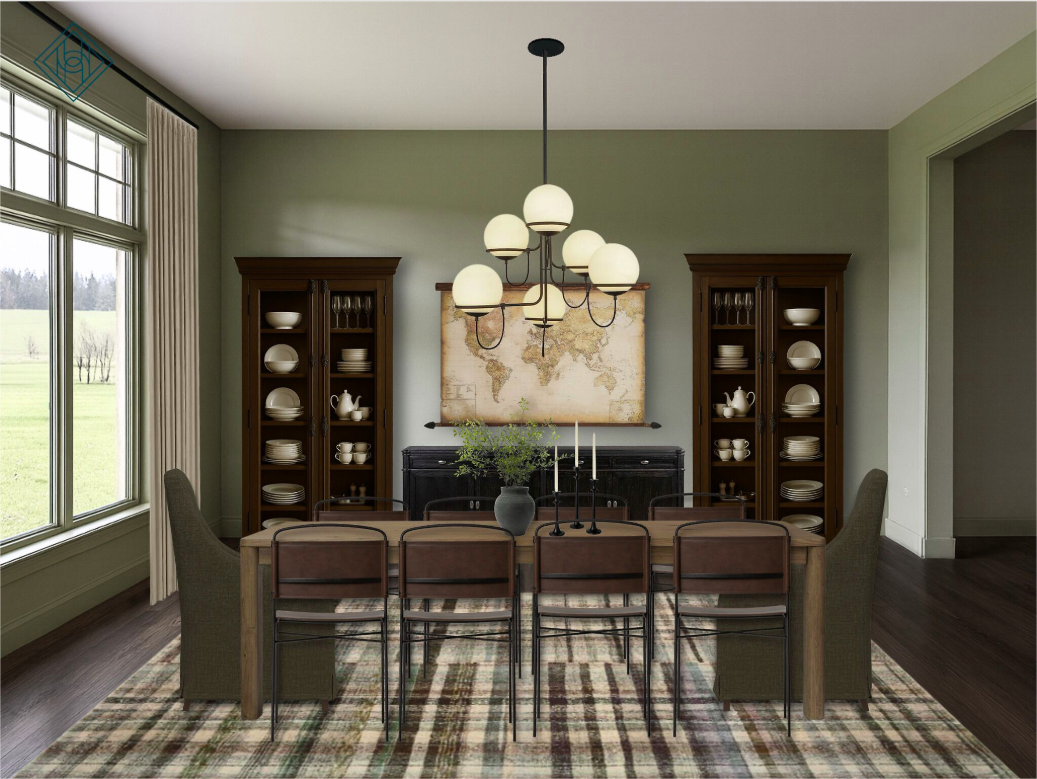
Start With Earthy, Muted Color Palettes
A successful masculine, moody space begins with color selection. Instead of true black or harsh charcoal, this design uses grounded, earthy tones like warm taupe walls, deep olive greens, and rich brown woods. These hues feel strong yet approachable and create an instant sense of depth.
In the bedroom, olive bedding and dark wood furniture anchor the room while allowing lighter textiles—like crisp white bedding and soft rugs—to balance the space. In the dining room, green-toned walls paired with warm wood cabinetry and black accents keep the room from feeling flat or overly formal.
Tip: If your room feels dull or heavy, layer warm neutrals alongside darker tones to maintain contrast and visual movement.
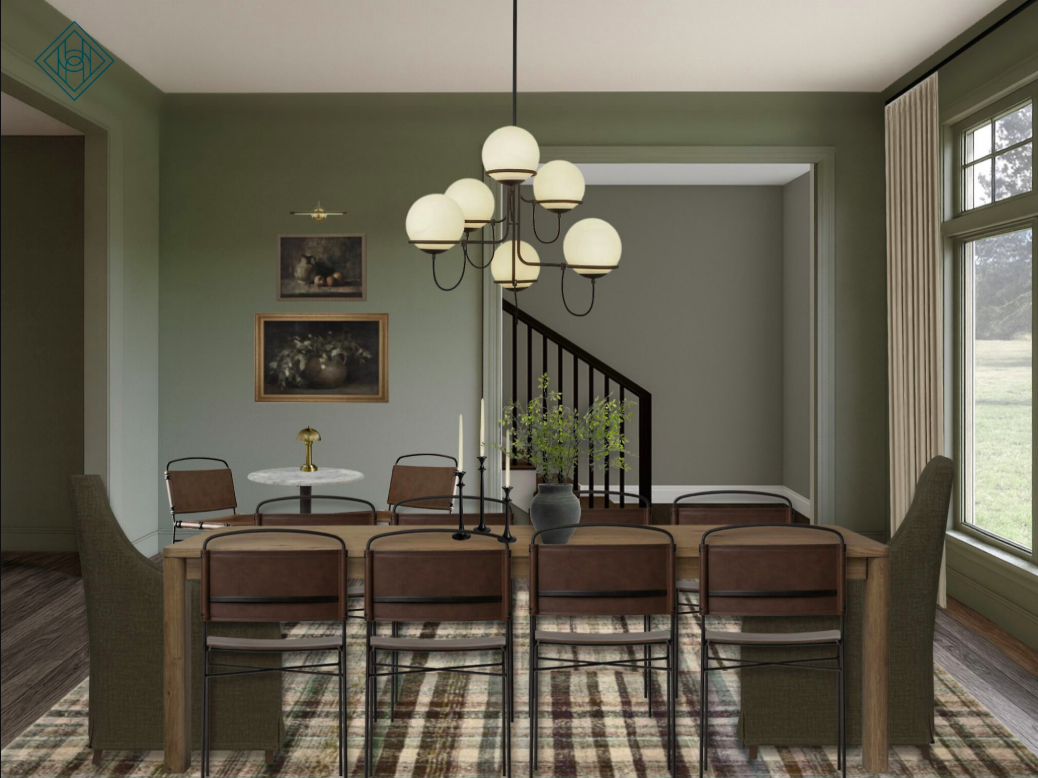
Choose Substantial Furniture With Clean Lines
Masculine interiors benefit from furniture that feels grounded and intentional. Think solid wood pieces, low-profile silhouettes, and furniture that visually “anchors” the room. In both the dining room and bedroom, larger-scale furniture creates structure and balance.
The upholstered bed with a tall wood headboard brings presence without excess ornamentation, while the dining table’s sturdy frame establishes the room as a gathering space rather than a pass-through. Even smaller elements—like nightstands and sideboards—feature clean lines and weighty finishes that reinforce the moody aesthetic.
Tip: If your space feels too light or unfinished, upgrading to fewer but more substantial pieces often makes a bigger impact than adding more décor.
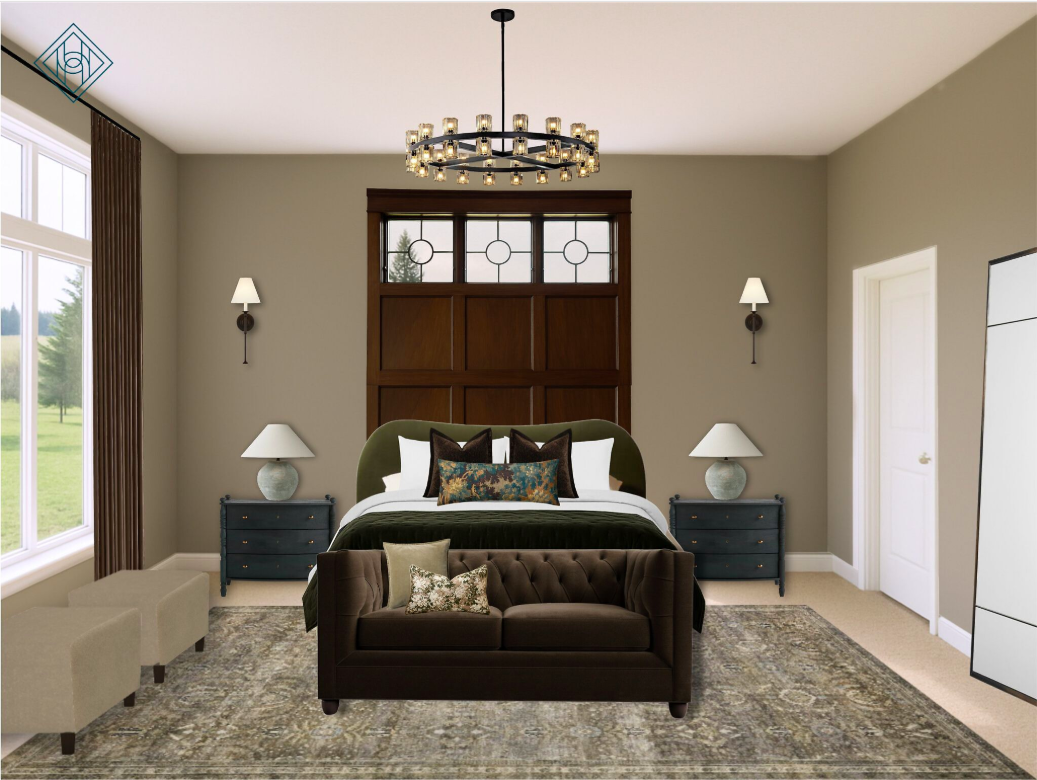
Layer Texture to Prevent Flat, Dark Spaces
One of the most common issues with moody design is that it can feel one-dimensional. Texture is the solution. This design layers velvet window treatments, upholstered seating, wood grains, woven rugs, and matte finishes to create richness without clutter.
In the bedroom, velvet drapery adds softness and depth against the structured wood bed and tailored nightstands. In the dining room, leather dining chairs, fabric armchairs, and a patterned rug add variation while keeping the palette cohesive.
Tip: If a dark room feels lifeless, add contrast through materials—soft vs. structured, matte vs. polished—rather than changing the color scheme.
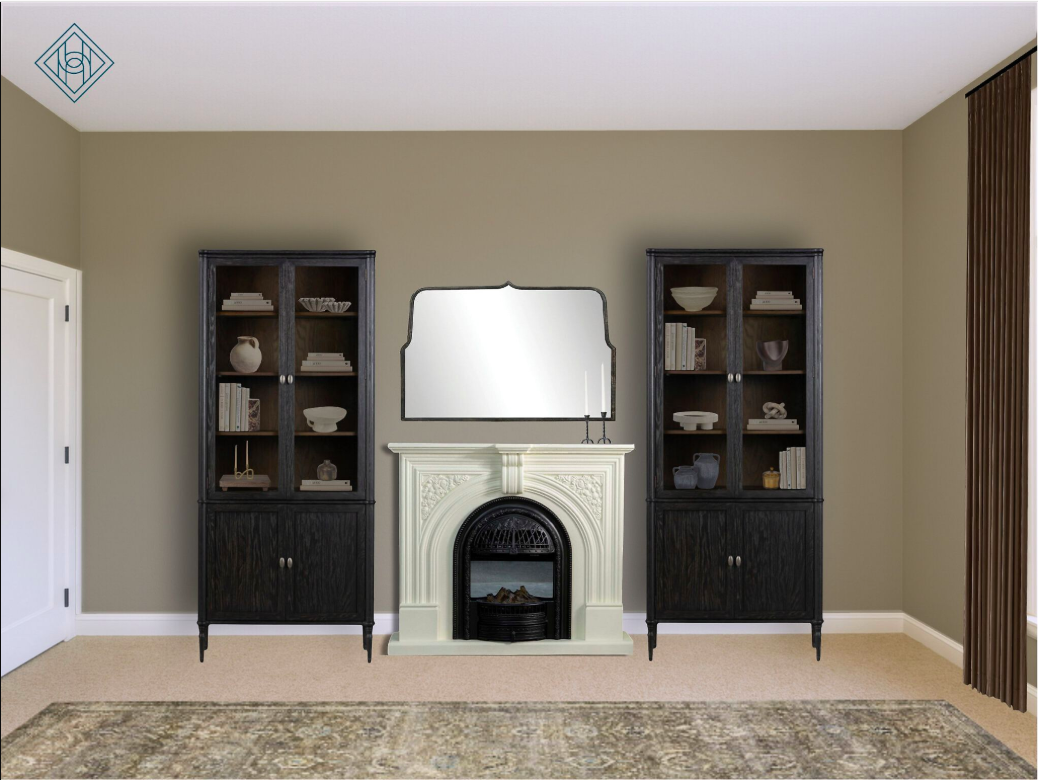
Use Lighting and Symmetry to Refine the Mood
Lighting is essential in masculine spaces. Instead of relying solely on overhead fixtures, this design incorporates layered lighting to control mood and function. Sculptural chandeliers with warm bulbs act as focal points, while wall sconces and table lamps provide ambient light that softens the overall feel.
Symmetry also plays a key role. Matching bookcases framing the fireplace, paired nightstands in the bedroom, and balanced dining seating all contribute to a sense of calm and intention. This structure prevents moody spaces from feeling chaotic or overly styled.
Tip: When a room feels off, check your lighting and symmetry first—small adjustments here can completely transform the space.