
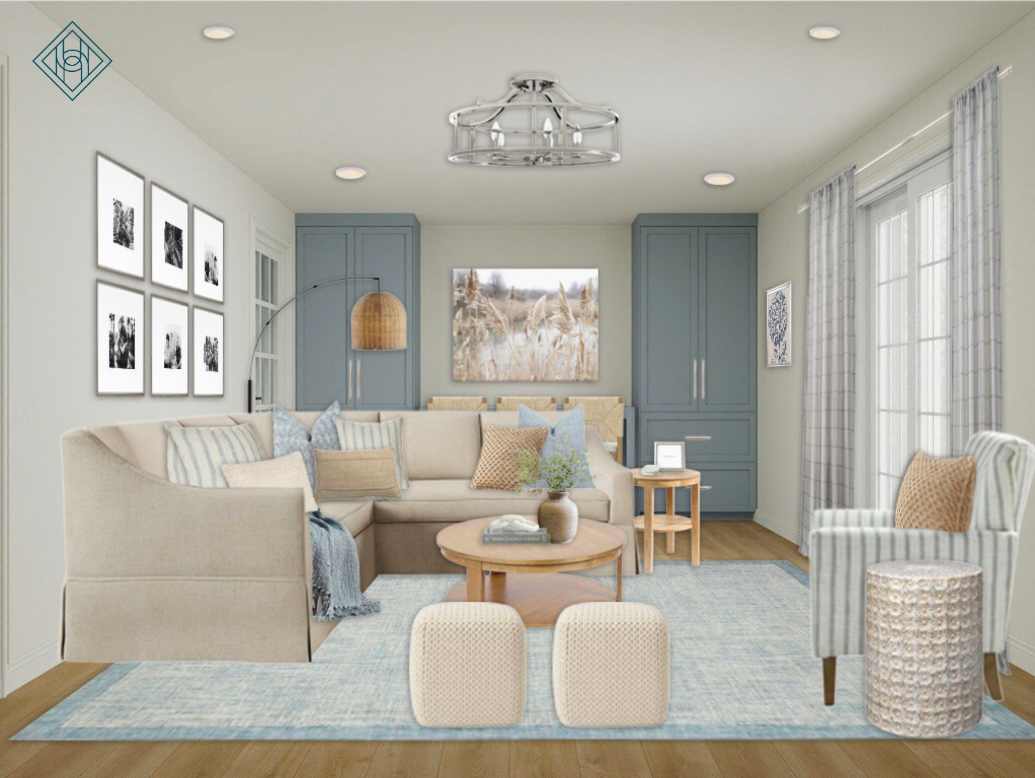
Start with a Soft Neutral Foundation
Begin by choosing a consistent base palette. In this room, we layered warm neutrals like Benjamin Moore White Dove on the walls and a soft oatmeal sectional to ground the space. These neutral elements act as a visual “resting point” that allows the repeated textures and patterns to shine without overwhelming the eye.
Design tip: Stick to one or two dominant neutrals, then repeat them through key upholstered pieces like your sofa, drapery, and area rug for cohesion. You’ll notice the curtains and wall paint are nearly identical here—making the windows feel taller and more seamless.
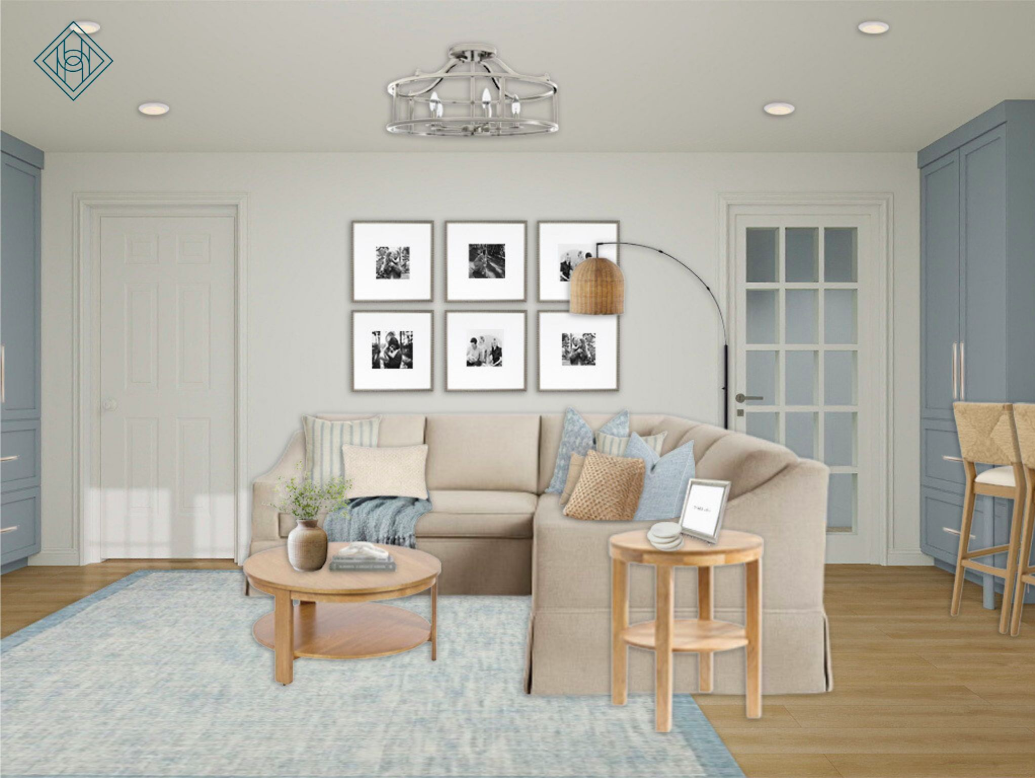
Echo Pattern Through Pillows and Accent Upholstery
To bring in subtle dimension, we chose throw pillows in a mix of striped, woven, and solid styles—all within a similar color story of soft blues and warm tans. The same soft blue hue appears again in the accent chair and built-in cabinetry, creating a sense of flow around the room.
Design tip: Pattern repetition doesn’t have to be bold. Small touches—like pinstripes in the armchair and pillows—are enough to build visual rhythm without clashing.
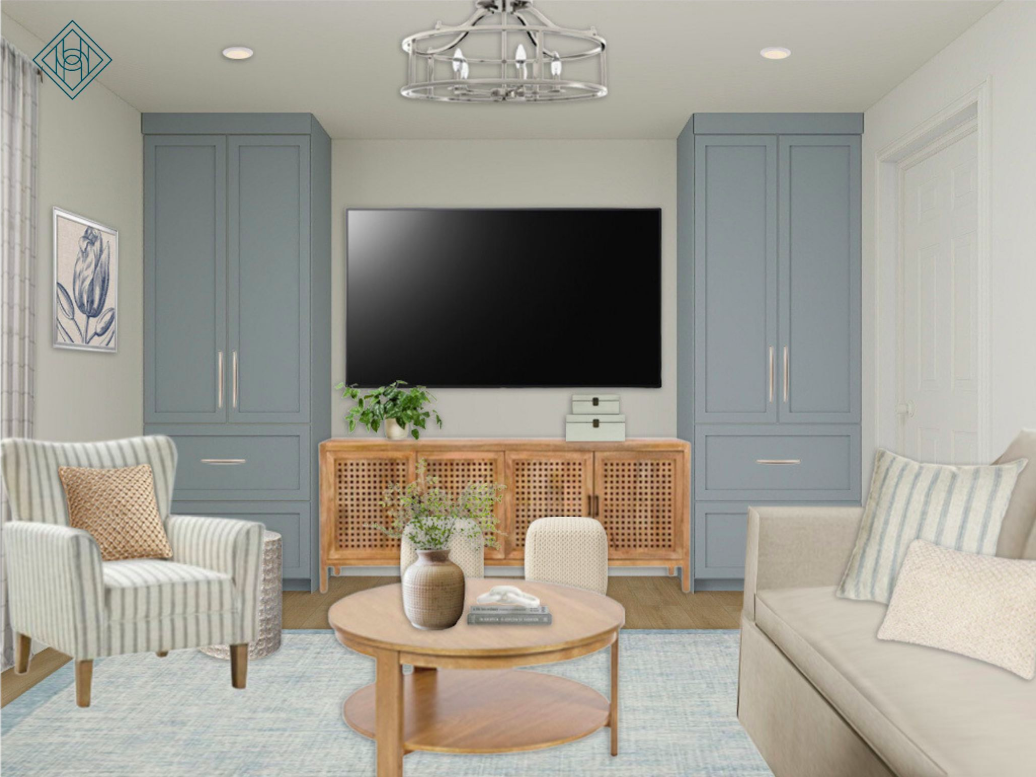
Layer Similar Textures for Added Warmth
Texture is the unsung hero of any well-designed room. This space features natural materials like the woven bar stools, rattan pendant light, knit poufs, and caned media console—each slightly different, but sharing a common tactile quality. These repeated earthy elements make the room feel cohesive and organic, without being matchy-matchy.
Design tip: Aim for 3–4 natural textures in different applications (lighting, furniture, accessories) to build subtle richness in the room.
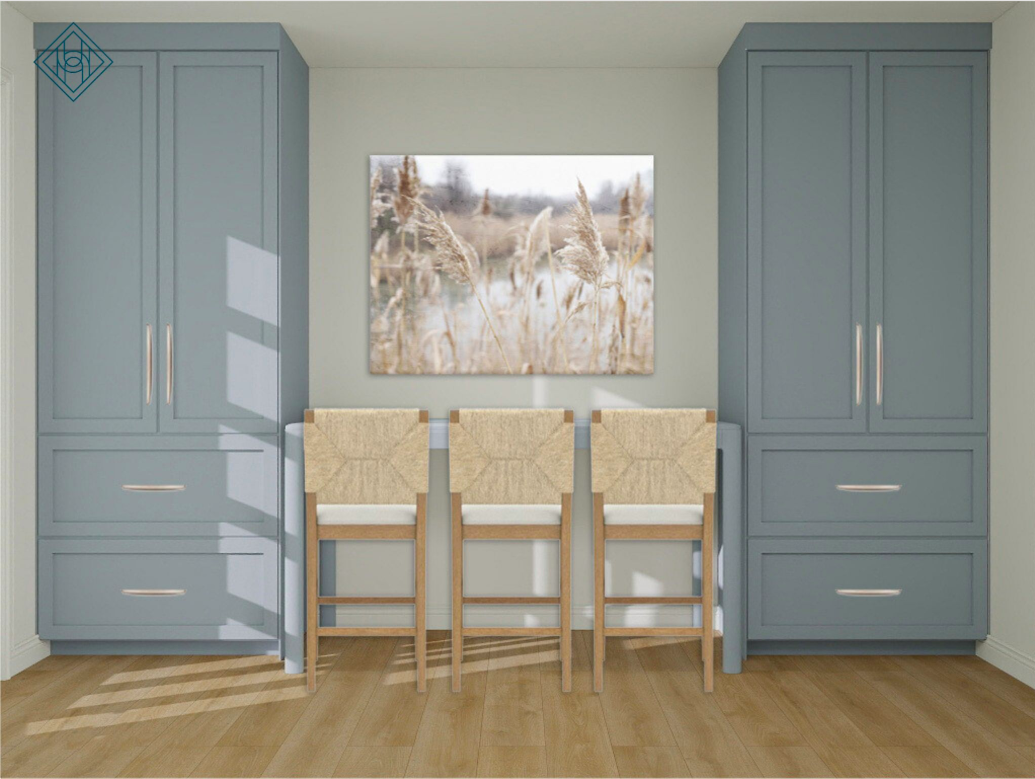
Use Repetition to Balance the Layout
Finally, don’t forget that layout and styling play a key role. Symmetrical black-and-white gallery frames behind the sofa are echoed by the botanical art on the opposite wall. On the far end, the bar area mirrors the media console, both framed by the same blue built-ins—a perfect example of how architectural symmetry and color repetition can ground your space.
Design tip: Visually "bookend" your space with repeated color, shape, or function (like matching built-ins or chairs) to create harmony across the room.